Introduction to the Global Black Population
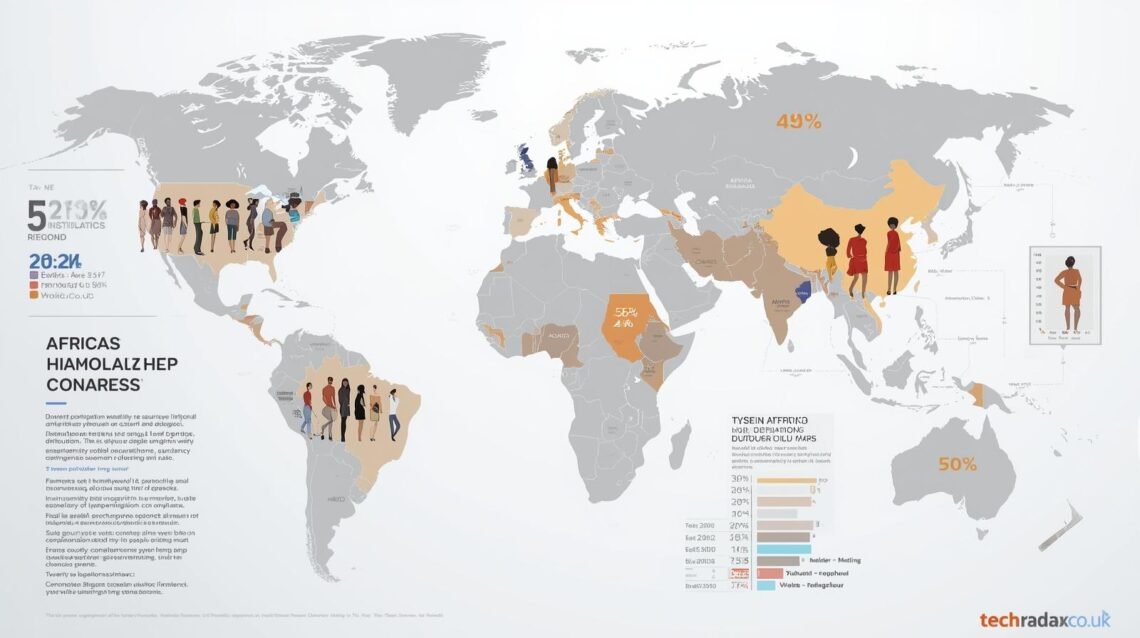
Understanding what percentage of the world is Black requires more than a simple statistic. It involves looking at global population data, regional demographics, historical trends, and how race is defined across different societies. Based on widely accepted demographic estimates, people of Black or African descent make up roughly 17–18% of the global population, which translates to about 1.3 to 1.4 billion people out of over 8 billion worldwide. This figure includes individuals living in Africa as well as those in the global African diaspora.
While this percentage provides a useful benchmark, it is important to recognize that race is not measured consistently across countries. Some nations rely on self-identification, others on ancestry, and some avoid racial classification entirely. As a result, global figures are estimates rather than exact counts. Even so, researchers and population experts generally agree that people of African descent represent one of the largest demographic groups on Earth.
Defining the Term “Black” in a Global Context
The term “Black” carries different meanings depending on geography, culture, and historical context. In most global demographic discussions, it refers broadly to individuals of Sub-Saharan African ancestry. However, the way people identify themselves can vary widely. In some countries, “Black” is a racial identity tied to shared cultural experiences, while in others it is more closely linked to physical characteristics or lineage.
This variation makes it challenging to create a universal definition. For example, in countries like Brazil, racial identity often exists on a spectrum rather than fixed categories. In contrast, nations such as the United States use more defined classifications. Because of these differences, global population estimates must rely on generalized definitions, which can influence the final percentage calculations.
The Population of Africa and Its Global Significance
Africa plays a central role in determining the percentage of Black people in the world. The continent is home to over 1.3 billion people, the vast majority of whom are of African descent. This alone accounts for a significant share of the global population. Sub-Saharan Africa, in particular, represents the core of the global Black population, with countries like Nigeria, Ethiopia, and the Democratic Republic of Congo leading in population size.
Beyond its size, Africa’s population is also one of the fastest-growing in the world. High fertility rates, combined with improving healthcare and declining mortality rates, have contributed to steady growth over the past few decades. This growth is expected to continue, meaning Africa will play an even larger role in shaping global demographics in the future.
The African Diaspora Across Continents
Outside Africa, millions of people of African descent live in what is known as the African diaspora. This includes populations in North America, South America, the Caribbean, Europe, and parts of Asia and the Middle East. The diaspora has its roots in historical events such as the transatlantic slave trade, colonial migration, and more recent patterns of global movement.
Countries like Brazil have one of the largest populations of people of African descent outside Africa, with a significant portion of the population identifying as Black or mixed race. The United States also has a large African American population, while Caribbean nations such as Haiti and Jamaica are predominantly Black. These communities contribute to the global total and influence cultural, social, and economic landscapes worldwide.
Historical Growth of the Black Population Worldwide
The global Black population has grown significantly over time. Around the year 2000, estimates placed the number of people of African descent at under 1 billion. Today, that number has surpassed 1.3 billion, reflecting rapid population growth, especially within Africa. This increase is largely driven by higher birth rates compared to other regions and improvements in public health.
Historically, population growth in Africa was slower due to factors such as disease, limited healthcare access, and economic challenges. However, advancements in medicine, infrastructure, and education have led to longer life expectancy and reduced mortality rates. These changes have contributed to a demographic shift that continues to shape global population patterns.
Regional Distribution of Black Populations
While Africa holds the majority of the global Black population, smaller but significant populations exist across other continents. In the Americas, countries like Brazil, the United States, and Colombia have millions of people of African descent. In Europe, countries such as the United Kingdom and France have growing Black communities due to migration and historical ties to Africa and the Caribbean.
In Asia and the Middle East, Black populations are smaller but still present, often as a result of historical trade routes and modern migration. Although these populations represent a smaller percentage of the total in those regions, they are an important part of the global demographic picture. Together, these regional distributions help explain how the overall percentage of Black people is calculated.
Challenges in Measuring Global Racial Percentages
Calculating the percentage of Black people in the world is not straightforward. One of the biggest challenges is the lack of standardized data collection methods. Some countries do not include race in their censuses, while others use categories that do not align with global definitions. This inconsistency makes it difficult to compare data across regions.
Another challenge is the concept of mixed ancestry. Many individuals have diverse backgrounds and may not identify strictly as one race. In countries with high levels of racial mixing, such as Brazil, classification becomes even more complex. These factors contribute to variations in estimates and highlight the limitations of global demographic data.
Comparing the Black Population with Other Global Groups
When compared to other global population groups, people of African descent represent a substantial share of humanity. Asia remains the most populous region, accounting for the majority of the world’s population. However, the Black population, at around 17–18%, is comparable to or larger than some other major demographic groups.
These comparisons help put global diversity into perspective. They also highlight the importance of understanding population distribution beyond simple numbers. Each group contributes to the cultural, economic, and social fabric of the world, making demographic analysis a valuable tool for understanding global trends.
Read more: what percentage of the world is black
Future Projections of the Global Black Population
Looking ahead, the percentage of Black people in the world is expected to increase. Africa’s population is projected to grow significantly by 2050, potentially reaching 2.5 billion people. This growth will likely raise the global share of people of African descent, making Africa an even more influential region in terms of population.
Urbanization is also expected to play a key role. As more people move to cities, access to education, healthcare, and employment opportunities improves. These changes can influence population growth rates and overall demographic patterns. While growth may eventually slow as development continues, the Black population will remain a major part of the global landscape.
Conclusion: Understanding a Dynamic Global Demographic
In conclusion, approximately 17–18% of the world’s population is Black, making people of African descent one of the largest demographic groups globally. This percentage reflects both the vast population of Africa and the widespread presence of the African diaspora. Although exact figures may vary due to differences in data collection and definitions, the overall estimate remains consistent across most studies.
Understanding this demographic is essential for appreciating global diversity and recognizing the contributions of Black communities around the world. As population trends evolve, particularly with Africa’s continued growth, the global percentage of Black people is likely to rise. This makes the topic not only relevant today but increasingly important for the future of global society.